Why Healthcare Determines Whether Societies Hold Under Pressure
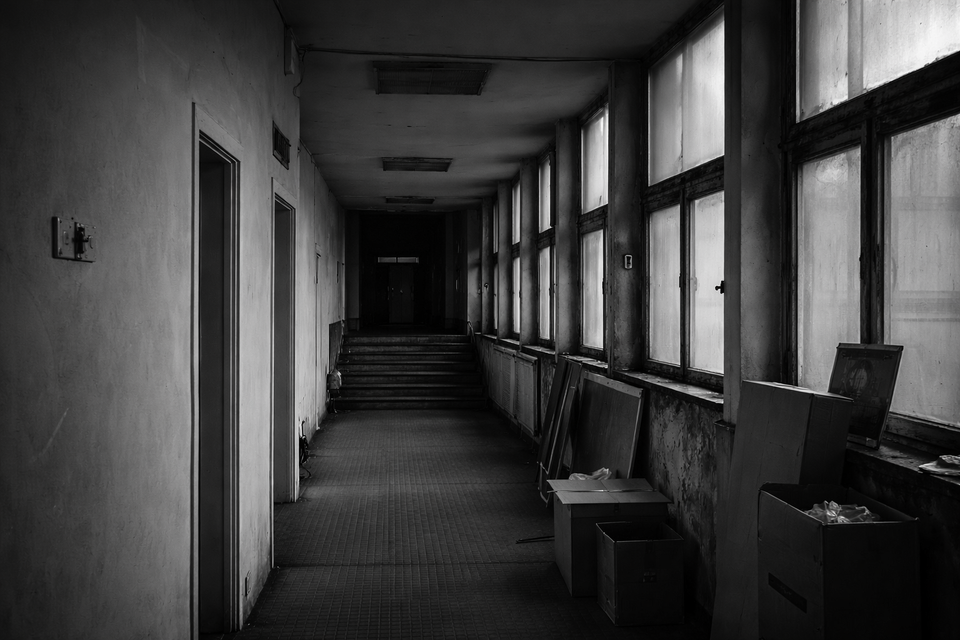
An analysis of healthcare as a stabilising system under sustained pressure
In Kharkiv, hospitals are being built underground.
Operating rooms are reinforced with concrete. Oxygen systems are designed to function without the power grid. Medical teams are trained to continue working while missiles strike above them.
Generators engage automatically. Headlamps come out. The work continues.
In much of Europe, hospitals are built of glass.
This contrast is not about architecture or taste. It reflects something deeper: what different societies assume they will be asked to endure. One system is designed to operate under prolonged pressure. The other is designed on the assumption that such pressure will never arrive.
The difference exposes a blind spot in how resilience is understood across Europe.
Societies do not collapse when the first missile lands. They collapse when families decide it is no longer safe to stay.
That decision is rarely ideological. It is practical. It is driven by systems: electricity, water, communications — and above all, healthcare. When hospitals stop functioning, when emergency and intensive care can no longer be relied upon, people leave. When people leave, labour markets hollow out. Tax bases erode. Institutions strain. And the ability to sustain any form of defence begins to fail from within.
Healthcare, often treated as a humanitarian or welfare concern, is in reality one of the most decisive pillars of societal endurance under pressure.
The Misunderstood Nature of Collapse
Modern crisis planning tends to focus on the moment of impact: the first strike, the first blackout, the first surge. These moments are dramatic, measurable, and politically visible. They lend themselves to dashboards, exercises, and press briefings.
But societies rarely fail at the moment of shock.
They fail later — in the quiet, cumulative phase where uncertainty becomes routine. Where disruptions stretch from hours into weeks. Where temporary measures become normal operating conditions. It is in this phase that the true determinants of resilience emerge.
Healthcare sits at the centre of this dynamic because it intersects directly with personal risk perception. Families can tolerate curfews, rationing, and disrupted services for a time. What they cannot tolerate is uncertainty about whether someone will survive an accident, a heart attack, a complicated birth, or an infection.
When that uncertainty becomes persistent, the calculation changes. Leaving becomes rational.
This is why healthcare capacity has a stabilising effect far beyond its immediate function. It anchors populations. It keeps people in place. And by doing so, it preserves the human and economic foundations that every other system depends on.
Healthcare as a System, Not a Service
In policy discourse, healthcare is often framed as a service sector: something delivered to individuals, measured in outputs, and optimised for efficiency. Beds per capita, waiting times, cost per patient.
Under pressure, these metrics become misleading.
What matters then is not peak efficiency, but continuity. Not how well the system performs on a normal day, but whether it can keep functioning when multiple dependencies fail simultaneously.
Healthcare systems depend on far more than doctors and nurses. They rely on energy, water, pharmaceuticals, logistics, data, and — critically — trained staff willing and able to remain at their posts under stress. Each dependency introduces a potential failure point. When several degrade at once, the system’s apparent capacity can collapse rapidly, even if physical infrastructure remains intact.
This is why healthcare behaves differently from many other forms of infrastructure. Roads can be repaired. Power grids can be rerouted. Communications can be degraded and still function at a basic level. Hospitals, by contrast, are binary in ways planners often underestimate. Either they can provide safe care, or they cannot. There is little meaningful middle ground.
Once that threshold is crossed, trust evaporates quickly.
The Behavioural Threshold
The decision to stay or leave is not made collectively. It is made household by household. Each family assesses its own risk, informed by stories, experiences, and signals from the systems around them.
Hospitals are one of the strongest of those signals.
When emergency departments divert patients, when surgeries are postponed indefinitely, when intensive care capacity becomes uncertain, the message received by the public is not technical. It is existential. It tells people that the margin for error has disappeared.
At that point, resilience is no longer a national attribute. It becomes a personal calculation.
Risk tolerance is not evenly distributed across a population.
Individuals may accept prolonged uncertainty about services and safety. Households with young children rarely do.
The presence of children fundamentally changes how risk is assessed. What might be tolerable uncertainty for an adult becomes unacceptable exposure for a family. The question is no longer whether daily life can continue under degraded conditions, but whether the system can absorb sudden, high-impact events — accidents, acute illness, or complications that require immediate care.
When confidence in emergency and intensive care weakens, this asymmetry becomes decisive. Parents do not wait for systems to fail completely. They act when reliability erodes, because the cost of being wrong is too high. At that point, leaving is no longer ideological or political. It is protective.
This dynamic explains why population stability often hinges on healthcare continuity even when other disruptions are endured. Schools may close. Power may be intermittent. Transportation may degrade. But once access to credible medical care becomes uncertain, families with children reach their threshold first. And when they move, the broader social and economic fabric begins to thin.
Ukraine as a Stress Test
Ukraine offers a rare, unfiltered view of how societies behave under sustained pressure. Not because its experience is unique, but because the pressure has been prolonged, multifaceted, and observable.
Cities did not empty when the first missiles fell. They thinned when civilian systems — especially healthcare — became uncertain. Where hospitals continued to function, populations held. Where continuity broke down, displacement followed.
This dynamic was not driven by morale or patriotism alone. It was driven by the practical realities of survival. Parents stayed where they believed their children could receive care. They left when that belief eroded.
The lesson here is not about heroism. It is about system design.
Ukraine has been forced to adapt its healthcare infrastructure for endurance: decentralising functions, hardening facilities, training staff for degraded conditions, and planning for extended disruption rather than short emergencies. These adaptations did not eliminate suffering. But they reduced the rate at which uncertainty turned into flight.
For Europe, the relevance lies not in copying wartime measures wholesale, but in recognising what those measures reveal about underlying assumptions.
Europe’s Hidden Vulnerability
Across much of Europe, healthcare systems have been optimised for efficiency, centralisation, and cost control. These are rational goals in stable conditions. Under prolonged stress, they can become liabilities.
Centralised systems create single points of failure. Just-in-time logistics reduce buffers. Highly specialised facilities depend on uninterrupted flows of power, data, and staff. When these assumptions hold, performance is excellent. When they do not, recovery is slow.
The problem is not that European healthcare is weak. It is that it has been designed for a world where pressure is temporary, predictable, and externally managed.
That world is fading.
Energy systems are contested. Supply chains are weaponised. Cyber disruptions are routine. Extreme weather events are increasing in frequency. And geopolitical instability now intersects directly with civilian infrastructure.
In this environment, resilience is not defined by how systems perform at their peak, but by how they degrade — and whether they continue to function well enough to sustain public confidence.
Healthcare sits at the heart of that equation.
The Strategic Implication
When healthcare fails, the consequences cascade outward. Workforce participation declines. Economic output contracts. Public trust erodes. Political legitimacy weakens. Defence capacity, which depends on all of the above, becomes brittle.
This is why healthcare should be understood not only as social infrastructure, but as strategic infrastructure. It underpins population retention, economic continuity, and state credibility under pressure.
Treating it as a secondary consideration in resilience planning is not just a policy oversight. It is a strategic blind spot.
The uncomfortable truth is that many Western societies have designed healthcare to fail gracefully — not to survive.
Graceful failure may be acceptable in markets. It is not acceptable in systems that determine whether societies hold together when conditions deteriorate.
Holding the Centre
Resilience is not built at the frontier. It is built in the places that keep a society alive when normality dissolves. In hospitals that continue to operate through blackouts. In medical teams that stay when uncertainty becomes routine. In systems designed not for speed, but for endurance.
When healthcare holds, people stay. When people stay, societies endure. And when societies endure, everything else — from economic stability to national defence — remains possible.
Understanding this is the first step toward recognising Europe’s invisible shield